Emergency Plumbing Help for Marlborough Homes
Request an estimate today
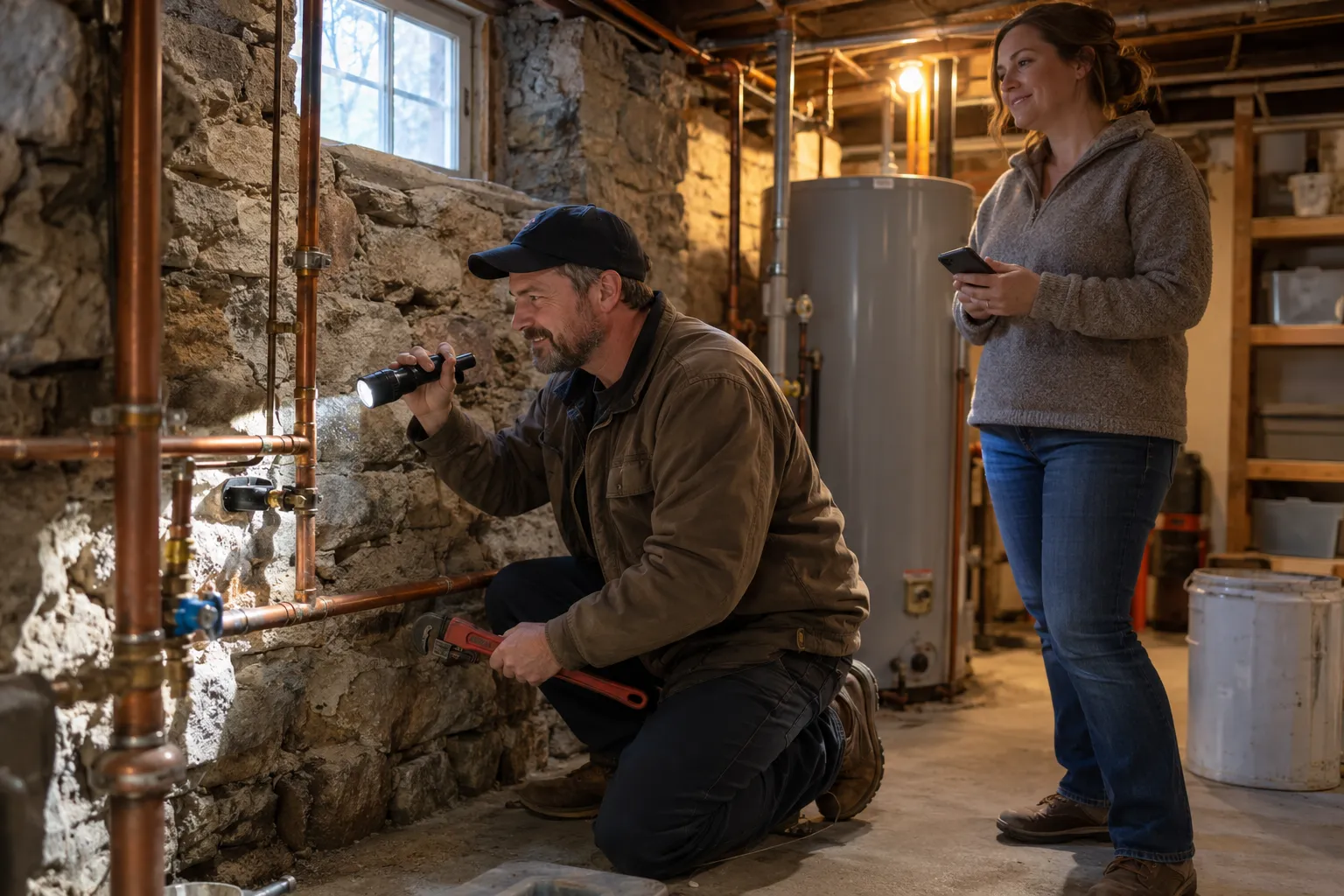
A plumbing emergency feels huge. Water on the floor. A toilet that will not stop rising. A pipe that cracked in the cold. This page gives you plain steps for the first hour, and it shows the small signs that often come before a big problem.
Standingdivided Plumbing is a referral service. We do not do the plumbing. We connect homeowners in the Marlborough area with independent local providers who handle burst pipes, water heater trouble, sewage backups and more. Request an estimate, and we pass your details to a provider in our network. Many providers can respond quickly, but availability varies. You can read the estimate, ask questions, and choose what to do next. There is no obligation.
Plumbing Trouble Right Now? Start Here
Water is where it should not be. Take one breath. You can handle this in small steps.
First, find your main shut-off valve. That is the valve that stops water to the whole house. In many older homes it sits in the basement, near the wall where the pipe comes in. Turn it clockwise until it stops.
Next, ask for help. Standingdivided Plumbing is a referral service. A local provider does the work. We only make the match.
Your Calm First Hour
A calm first hour saves money. Do these things in order. Each one takes a minute or two.
Stop the water
Shut the main valve. Then open one faucet on the bottom floor of the house to let the pipes drain. If a single fixture is leaking, look for the small valve under the sink or behind the toilet. Turn it off first.
Keep power and people safe
Water and electric power do not mix. If water is near outlets, a panel, or an appliance, stay back. Turn off power at the breaker only if the panel is dry and you can reach it safely. If you smell gas, leave the house and contact your gas utility from outside.
Take photos before you clean
Snap photos and short videos of the leak, the wet walls, and any damaged items. Providers can often help document damage for a claim. Some policies may cover sudden damage, so check your policy.
What Counts as a Plumbing Emergency
Not every drip is an emergency. These are:
- A burst or cracked pipe spraying or pooling water
- Sewage coming up through floor drains or toilets
- No water at all, with no known cause
- A water heater that leaks hard or makes loud banging
- Water pouring through a ceiling
A slow drip under a sink can usually wait for a normal visit. Still, shut off its small valve and put a bucket under it.
Early Signs You Can Catch Before It Gets Bad
Small sign, small fix. Many big repairs start as quiet clues. Watch for these:
- A water bill that jumps with no change in habits
- Damp, musty smell in the basement
- Paint that bubbles or peels on a wall
- Water pressure that slowly drops
- Rust-colored water from the tap
- Pipes that knock or hum when you run water
If you see one, check your water meter. Turn off all water, then watch the dial. If it still moves, you may have a hidden leak. Catch it early and the fix is often smaller.
Burst Pipes and Cold Snaps
Winter is hard on pipes. Water turns to ice and swells. The pipe can split. Often you do not see the damage until the ice melts, and then water pours out.
Older homes with stone or block foundations often have pipes along cold outer walls. Crawl spaces and unheated basements are risky too. In spring, melting snow can also push water into basements.
If a pipe is frozen but not yet split, open the nearby faucet. Warm the pipe slowly with a hair dryer on low. Never use a flame. If a pipe has split, shut off the main valve and keep the faucet open.
Water Heater Trouble
A water heater tank holds many gallons. When it fails, it can leak fast. Warning signs include puddles at the base, rusty hot water, and popping or rumbling sounds.
If the tank is leaking, turn off the cold water valve above it. Switch off the power or gas supply to the unit. Do not touch hot water or hot pipes. A provider can tell you whether a repair or a new tank makes more sense.
Sewage Backups and Blocked Pipes
If dirty water comes up from a floor drain or toilet, stop using water in the house. Do not flush. Do not run the washer or dishwasher. Keep children and pets away from the water.
A backup may mean a blocked pipe in your own line or in the main sewer line. Blocked pipe services can find the cause. Some jobs need only drain clearing. Others may need sewer line repair. A provider can check which one you have.
How to Choose a Provider
A stressful day is when people rush. Take two minutes to ask a few things first:
- Is the provider licensed in your state? Ask for proof.
- Does the provider carry insurance?
- Will you get a written quote before work starts?
- Can they explain the problem in plain words?
Be careful with anyone who will not give a price range. Be careful with anyone who pushes a huge job right away. A good provider explains the options and lets you decide.
Request a callback to check provider availability in your area.
After the Repair
When the water stops, the work is not quite done. Dry wet areas fast with fans and open windows. Throw out soaked drywall or carpet that stays wet. Mold can start in a couple of days.
Keep your quote, invoice, and photos together. Ask the provider what caused the problem. Ask what early signs to watch for next time. Learn where your main valve is, and test it once a year.
What's Included
Burst Pipes
Providers in our network can find the split, stop the leak, and replace the damaged section of pipe so water can be turned back on.
Leak Finding
A provider can trace hidden leaks behind walls, under floors, and in basements before they harm your home.
Water Heater Issues
Leaking tanks, no hot water, and strange noises can be checked and fixed.
Backups and Blockages
Sewage or slow water can be traced to the source and cleared.
Typical Emergency Plumbing Costs
Prices vary by job, home, and time of day. These are typical U.S. ranges only. Emergency visits can cost more than regular visits. Always ask for a written quote before work starts, and ask what it includes.
| Item | Typical range | Notes |
|---|---|---|
| Emergency service visit | $150 – $500 | Often covers the trip and first look |
| Small pipe leak repair | $150 – $600 | Depends on pipe type and access |
| Burst pipe repair | $500 – $2,500 | Higher if walls must be opened |
| Water heater repair | $150 – $700 | Parts and tank age matter |
| Water heater replacement | $1,200 – $3,500 | Tank size and fuel type change price |
| Main shut-off valve replacement | $200 – $800 | Older valves may be hard to reach |
How It Works
Share Your Problem
Tell us what is happening, where it is, and what you have already tried.
Get Matched Locally
We pass your details to an independent provider in our network near you.
Review the Estimate
The provider explains the work and the price range. Ask any questions you have.
Choose What Comes Next
Say yes to book the work, or say no. The decision is always yours.
Why Call Standingdivided Plumbing
Plain Answers
Each step is explained in simple words, so you know what is happening before you decide anything.
Local Providers
Requests go to independent providers who serve homes in your part of the region.
No Pressure
You review the estimate on your own time. There is no obligation to say yes.
Early Guidance
Learn the small signs, so you can act sooner.
Other Services
Need emergency plumbing help in Marlborough?
- Learn the early signs of pipe trouble
- Simple steps for the first hour
- Request an estimate online
- No obligation to hire
Emergency Plumbing Help FAQ
What should I do first if a pipe bursts?
Shut off the main water valve right away. Then open a faucet on the bottom floor to drain the pipes. Stay away from water near outlets or the electrical panel. Take photos, then ask a local provider for help.
Is a clogged toilet a plumbing emergency?
Usually not, unless water is rising or sewage is backing up in other drains. Stop using water, shut the toilet's small valve, and try a plunger. If it keeps coming back, request an estimate.
Will homeowners insurance pay for a burst pipe?
Some policies may cover sudden damage, like a burst pipe. They often do not cover slow leaks or wear. Check your policy, take photos, and keep your invoice. Providers can often help document damage for a claim.
Reach a local provider
Tell us what is wrong and where you are. Send a short request, and we will point you to a local provider in our network who can look at it.
No obligation